Total knee replacement rehab for a stronger, pain-free recovery
Getting your new knee isn’t the finish line. The real work starts after surgery, and proper rehabilitation makes all the difference. Our licensed physical therapists bring expert knee surgery recovery therapy to your home, helping you regain function, reduce pain, and get back to the activities you’ve been missing.

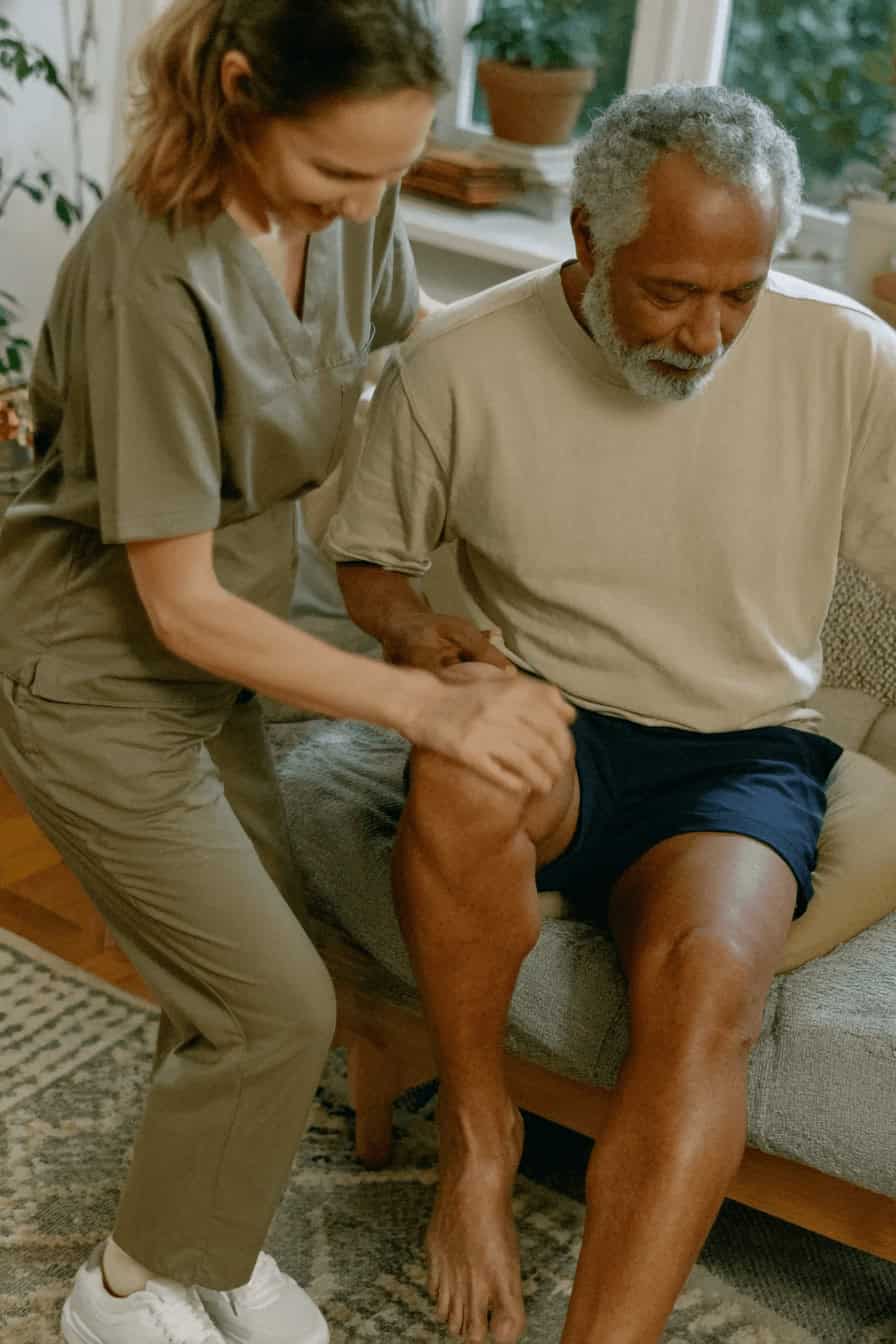
Physical therapy designed for knee replacement recovery
Total knee replacement rehabilitation focuses on restoring your range of motion, rebuilding strength in the muscles around your new joint, and retraining movement patterns for everyday activities. Our therapists use evidence-based techniques to reduce swelling, manage pain, and help you achieve the best possible outcome from your surgery.
Addressing the unique challenges of knee recovery
Knee replacement recovery requires consistent effort to regain flexion and extension while managing post-surgical stiffness and swelling. We focus on exercises that specifically target knee function, gait training to correct walking patterns, and techniques to reduce pain without relying solely on medication.
Building strength and confidence for daily life
A successful recovery means more than just a functioning joint. We help you rebuild the leg strength needed for stairs, getting in and out of chairs, and walking confidently. Your therapist progresses your program based on your healing timeline and functional goals.
Is knee replacement rehab right for you?
People who benefit from post-operative knee therapy
You recently had total knee replacement surgery
Whether you’re fresh out of the hospital or several weeks into recovery, physical therapy is critical for achieving full range of motion, building strength, and preventing long-term stiffness in your new knee.
You’re struggling with pain, swelling, or limited motion
Post-surgical discomfort is normal, but proper therapy helps manage these symptoms while ensuring you make steady progress toward your functional goals without setbacks.
Getting to outpatient therapy isn’t realistic right now
Early knee replacement recovery makes transportation difficult and painful. We bring specialized orthopedic rehabilitation directly to you so you can stay on track without the stress of travel.
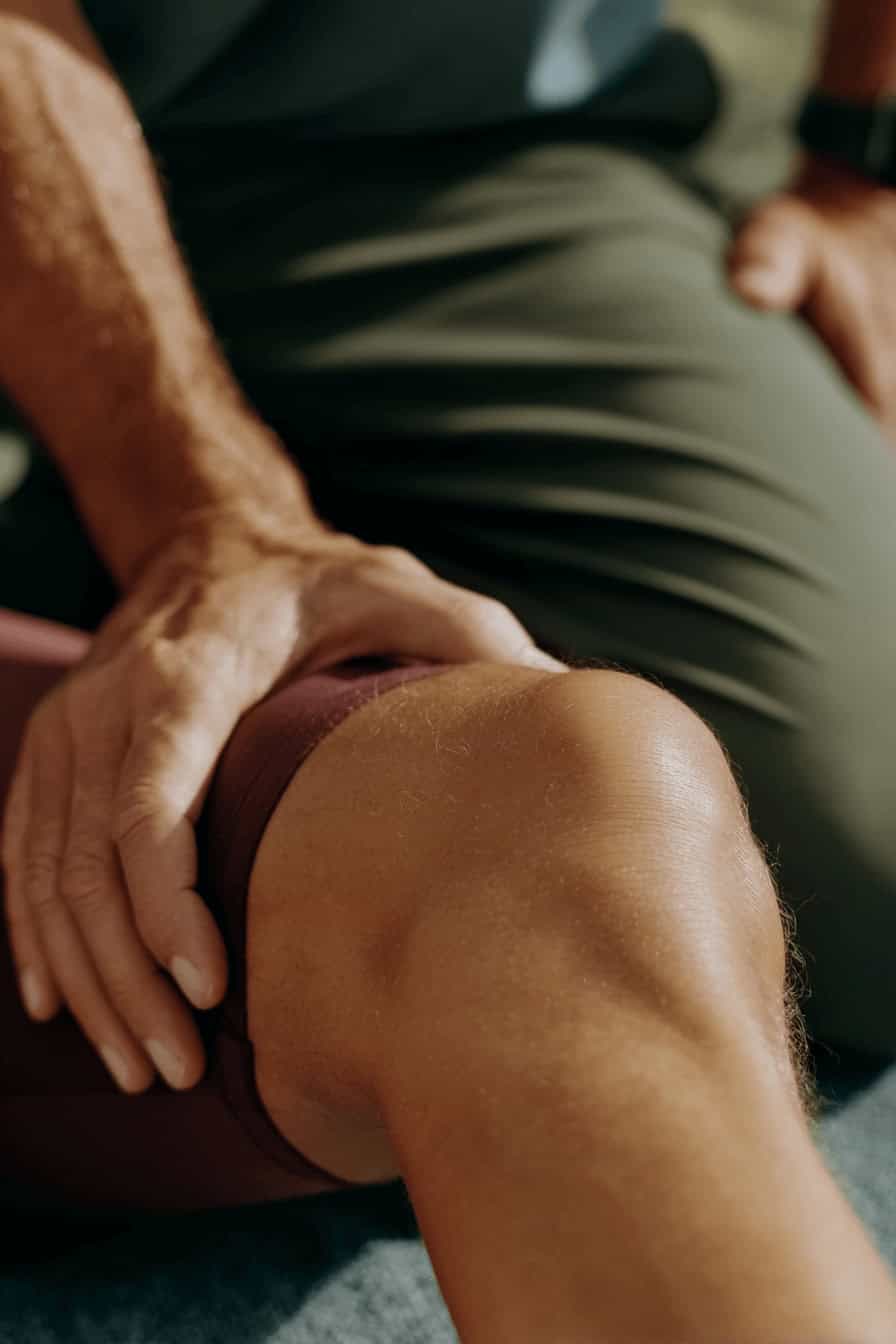
Schedule your initial session
Contact us before or immediately after hospital discharge. We’ll review your surgical details, current limitations, and therapy orders from your surgeon. Most patients begin therapy within 24-48 hours of returning home.
Your therapist evaluates and begins treatment
During your first visit, your physical therapist measures your knee’s range of motion, assesses swelling and pain levels, and starts gentle exercises to prevent stiffness. We also teach you proper movement techniques and precautions.
Consistent therapy until you reach your goals
We visit you 2-3 times weekly, progressing your exercises as your knee heals. Your therapist monitors for complications, adjusts treatment based on your response, and communicates regularly with your surgeon about your progress.
Deep experience with knee replacement recovery
Our therapists specialize in post-surgical knee rehabilitation and understand the specific timeline, challenges, and milestones of TKR recovery. We know how to push you appropriately while keeping you safe.
Home therapy when mobility is most limited
We serve Lee, Collier, Charlotte, and Sarasota counties, bringing expert care to your door during the weeks when getting around is hardest. No car rides, no waiting rooms, just focused therapy in your home.
Insurance coverage and surgical team coordination
We accept most major insurance plans including Medicare and handle all authorization paperwork. We stay in contact with your orthopedic surgeon to ensure your rehab follows their post-operative protocol exactly.

Google reviews
Real people, real outcomes
Dynamic Rehab is remarkable. They are thoughtful, kind, knowledgable, professional and hugely competent.
My weekly appointments with Dynamic Rehab have been quite fruitful in addressing my long term issues with scoliosis and sciatica.
Dynamic Mobile Rehab is awesome. I had hip replacement surgery last summer and they are helping me recover muscle strength.
I was 7 months post op from a total hip and started having issues. They have been amazing getting me back on track.
Dynamic Rehab is remarkable. They are thoughtful, kind, knowledgable, professional and hugely competent.
My weekly appointments with Dynamic Rehab have been quite fruitful in addressing my long term issues with scoliosis and sciatica.
Dynamic Mobile Rehab is awesome. I had hip replacement surgery last summer and they are helping me recover muscle strength.
I was 7 months post op from a total hip and started having issues. They have been amazing getting me back on track.
Dynamic Mobile Rehab is doing a great job with PT for my elderly father. Slow but sure progress. Thank you!
After completing 7 weeks of PT with Dynamic Mobile Rehab, I have made significant progress returning strength and mobility to my shoulder.
I’m rehabbing from surgery and have loss of balance and strength. There’s great improvement in both from my therapy sessions.
I couldn’t be happier with the care I received from Dynamic Mobile Rehab. I always feel much better after my sessions with them.
Dynamic Mobile Rehab is doing a great job with PT for my elderly father. Slow but sure progress. Thank you!
After completing 7 weeks of PT with Dynamic Mobile Rehab, I have made significant progress returning strength and mobility to my shoulder.
I’m rehabbing from surgery and have loss of balance and strength. There’s great improvement in both from my therapy sessions.
I couldn’t be happier with the care I received from Dynamic Mobile Rehab. I always feel much better after my sessions with them.
Frequently asked questions
When should physical therapy start after knee replacement surgery?
Physical therapy must begin immediately after total knee replacement surgery to achieve optimal results. Therapy typically starts in the hospital within 24 hours of your procedure with range of motion exercises and assisted standing. The first days after surgery are critical for preventing stiffness and achieving adequate knee flexion and extension. Once discharged home (usually 1-3 days post-surgery), at-home physical therapy should continue within 24-48 hours without interruption. The first 6-12 weeks post-surgery represent a critical window for regaining motion, with the first 2 weeks being particularly important for preventing scar tissue formation that limits bending. Early, aggressive therapy yields significantly better long-term outcomes than delayed rehabilitation. Knee replacement patients who start therapy immediately achieve better range of motion, less pain, and faster functional recovery than those who wait. We work closely with your surgeon to ensure therapy begins promptly and follows their specific protocol. Delaying therapy even a few days can result in permanent motion loss that’s difficult or impossible to regain later, making immediate post-operative rehabilitation essential for knee replacement success.
How much knee bending should I have after surgery?
Knee flexion (bending) goals after total knee replacement follow a typical progression, though individual results vary. By 1-2 weeks post-surgery, you should achieve 90 degrees of flexion (right angle). By 4-6 weeks, most patients reach 110-120 degrees, which allows comfortable sitting, stair climbing, and most daily activities. The ultimate goal is 120-130 degrees of flexion by 8-12 weeks, though some patients achieve more. For context, normal knee flexion is about 135 degrees, sitting in a regular chair requires 90 degrees, climbing stairs needs 90-100 degrees, and getting up from a low chair or toilet requires 110-120 degrees. Extension (straightening) is equally important and should reach 0 degrees (completely straight) within the first few weeks. Your physical therapist measures your range of motion at each visit, comparing progress to expected benchmarks and adjusting treatment when you’re behind goals. Achieving adequate flexion requires consistent work including exercises, stretching, and sometimes manual therapy from your therapist. The motion you gain in the first 3 months typically represents your long-term result, making diligent participation in therapy crucial during this window.
Why is my knee so stiff after replacement surgery?
Knee stiffness after replacement surgery occurs for several reasons, all of which improve with proper physical therapy. Surgical trauma causes inflammation and swelling in the joint and surrounding tissues, naturally limiting motion. Scar tissue begins forming immediately after surgery, and without regular movement, this tissue can bind the joint and permanently restrict motion. Muscles around your knee weaken quickly from surgery and inactivity, reducing your active ability to bend and straighten the leg. Pain and apprehension also cause muscle guarding where your body subconsciously resists movement to protect the surgical site. Additionally, the prosthetic joint components initially feel foreign and take time to move smoothly as tissues adapt. The good news is that stiffness dramatically improves with consistent physical therapy including range of motion exercises, gentle stretching, manual therapy, ice to control swelling, and gradual strengthening. The first 6-12 weeks are critical for overcoming stiffness. Patients who push through discomfort and consistently work on motion achieve significantly better outcomes than those who let pain and stiffness prevent adequate exercise. Your therapist helps distinguish between expected post-surgical tightness and concerning stiffness that requires additional intervention.
How painful is knee replacement rehabilitation?
Knee replacement rehabilitation involves discomfort, but therapy shouldn’t cause severe pain. You’ll experience soreness, stretching sensations, and muscle fatigue as you work to restore motion and strength. The first 2-4 weeks are typically the most uncomfortable as swelling is highest and you’re working through initial stiffness. Range of motion exercises, particularly bending, often cause significant discomfort because you’re stretching tight tissues and breaking up scar tissue formation. However, this productive discomfort is necessary for regaining motion and differs from sharp, acute pain that indicates harm. Your therapist monitors your pain levels carefully, adjusting exercise intensity appropriately. Pain typically decreases week by week as inflammation resolves and tissues heal. Using ice after therapy, taking pain medication as prescribed before sessions, and performing exercises consistently rather than in sporadic intense bursts helps manage discomfort. Most patients describe therapy as “hard work” rather than unbearable pain. By 6-8 weeks, pain decreases substantially and therapy becomes much more comfortable. Patients who avoid therapy due to pain concerns typically end up with worse long-term pain from stiffness and weakness than those who push through temporary discomfort during rehabilitation.
Can I go up and down stairs after knee replacement?
Yes, you’ll learn to manage stairs after knee replacement, though it takes practice and proper technique. Initially, you’ll use a step-to pattern (bringing both feet to each step before proceeding to the next) with handrail support for safety. When going up, lead with your non-surgical leg, then bring your surgical leg to meet it. When descending, lead with your surgical leg, followed by your non-surgical leg. The memory trick is “up with the good, down with the bad.” This pattern reduces stress on your new knee while it’s weak and healing. Your physical therapist practices stairs with you once you have adequate strength, balance, and range of motion, typically 2-4 weeks post-surgery. As strength improves over 6-12 weeks, many patients progress to a step-over-step pattern (alternating feet on each step) like normal stair climbing. Some patients permanently use a step-to pattern for safety and comfort, which is perfectly acceptable. Your home’s stair configuration matters too. Stairs with handrails are safer than those without. Your therapist assesses your specific situation and teaches techniques appropriate for your recovery stage and home environment.
When can I return to work after knee replacement?
Return to work timing after total knee replacement depends heavily on your job’s physical demands and your recovery progress. Sedentary desk jobs may allow return at 4-6 weeks post-surgery when you’re off narcotic pain medication, can sit comfortably for extended periods, and have arranged transportation since you won’t be driving yet. Jobs requiring prolonged standing, walking, or physical labor typically require 8-12 weeks or longer before safe return. Heavy labor jobs involving lifting, climbing, or kneeling may need 3-6 months for adequate recovery. Your surgeon provides return-to-work clearance based on your healing progress, pain levels, and job requirements. Physical therapy prepares you for work demands by building the strength, endurance, and functional capacity needed for your specific job tasks. Some patients benefit from graduated return with reduced hours or modified duties initially. Factors affecting timeline include your age, overall health, pre-surgery fitness, job flexibility, and how diligently you participate in rehabilitation. Returning to work too soon risks reinjury, increased pain, delayed healing, and poor work performance. Your therapist and surgeon work together to determine when you’ve recovered sufficiently for safe, productive return to your specific occupation.
How do I schedule at-home knee replacement rehabilitation?
Scheduling at-home knee replacement rehab should ideally happen before your surgery, though we can arrange coverage quickly after discharge if needed. Contact us to discuss your upcoming or recent knee replacement surgery. We’ll gather information about your surgery date, surgeon, hospital discharge plans, and any specific restrictions or precautions. You’ll need a physician order for home health physical therapy, which your surgeon typically provides at hospital discharge. We schedule your first at-home visit within 24-48 hours of arriving home, ensuring continuity of the therapy you began in the hospital. During your initial session, your therapist assesses your current knee motion, pain, swelling, and functional abilities, then creates a personalized treatment plan focused on your specific needs and goals. We coordinate directly with your surgeon’s office throughout recovery, tracking your progress and adjusting treatment as you improve. All insurance verification and authorization is handled by our team, so you focus on recovery rather than paperwork. Our therapists visit 2-3 times weekly initially, bringing all necessary equipment and expertise to your home. We serve Lee, Collier, Charlotte, and Sarasota counties throughout Southwest Florida. Contact us today to arrange seamless knee replacement rehabilitation in your home.
