Shoulder replacement rehab to restore function and eliminate pain
Shoulder replacement surgery gives you relief from chronic pain, but proper rehabilitation determines how well your new joint functions. Our licensed physical therapists bring specialized shoulder surgery recovery therapy to your home, helping you regain range of motion, rebuild strength, and return to daily activities without limitations.
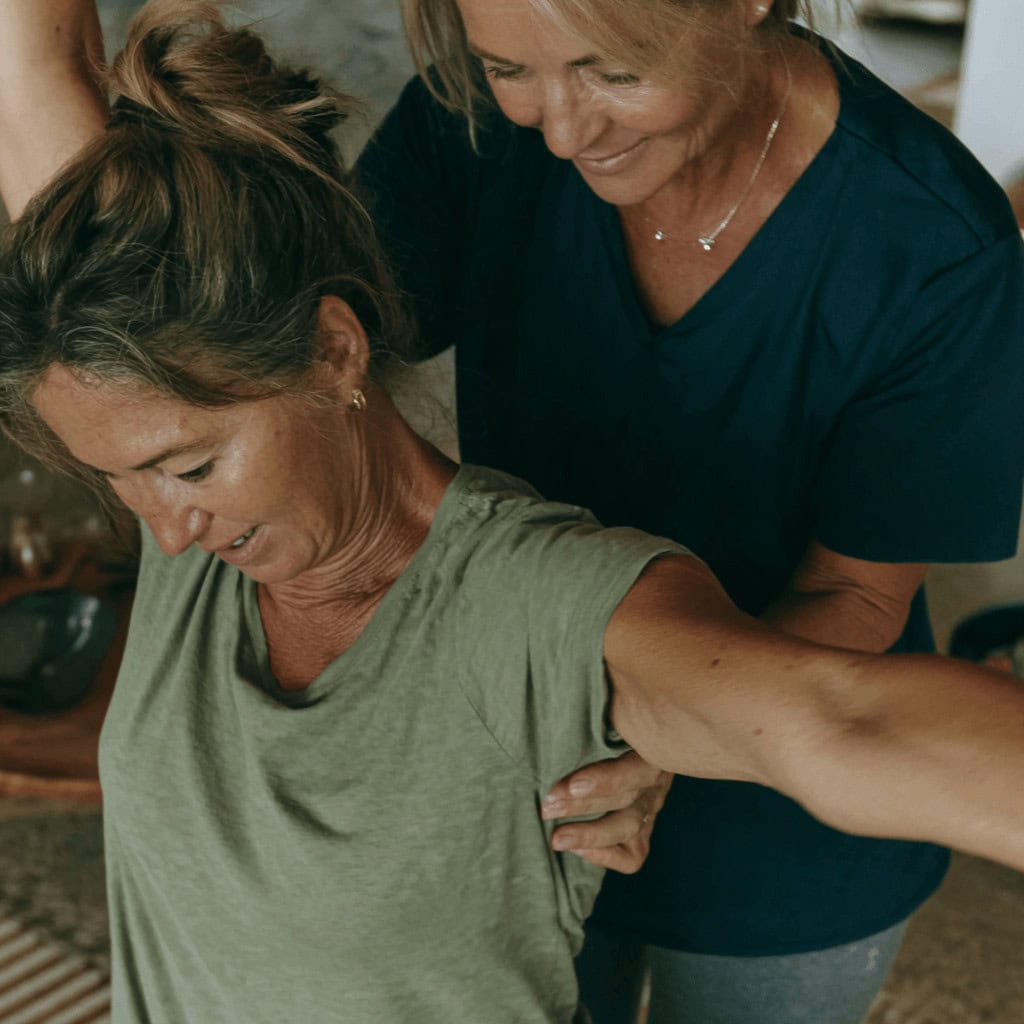

Physical therapy designed for shoulder replacement recovery
Shoulder replacement rehabilitation focuses on restoring your shoulder’s mobility while protecting the new joint during healing. Our therapists use carefully phased exercises to reduce pain and stiffness, strengthen the rotator cuff and surrounding muscles, and retrain movement patterns for activities like reaching, lifting, and dressing.
Protecting your new joint while restoring function
Early shoulder replacement recovery requires strict precautions to prevent dislocation and protect healing tissues. We guide you through safe movement patterns and progress your exercises at the right pace, balancing protection with the need to regain mobility.
Addressing the unique challenge of shoulder movement
The shoulder has the greatest range of motion of any joint in the body, making rehabilitation complex. We focus on restoring overhead reach, rotation, and functional movements while building the strength needed to support your new joint long-term.
Is shoulder replacement rehab right for you?
People who benefit from post-operative shoulder therapy
You recently had total shoulder replacement surgery
Whether you had surgery for arthritis, a massive rotator cuff tear, or another condition, physical therapy is critical for achieving the best possible outcome and preventing stiffness in your new joint.
You want to regain overhead reach and rotation
Shoulder replacement limits your ability to reach, lift, and perform daily tasks. Structured rehabilitation helps you regain these functions so you can dress yourself, cook, drive, and return to activities you enjoy.
Getting to outpatient therapy isn’t realistic
Early shoulder recovery makes driving difficult or impossible, and you may still be wearing a sling. We bring expert orthopedic rehabilitation to your home so you can focus on healing without transportation stress.

Schedule your post-surgical evaluation
Contact us immediately after surgery or before hospital discharge. We’ll review your surgical details, precautions from your surgeon, and therapy orders. Most patients can begin therapy within 48-72 hours of returning home.
Your therapist assesses and begins gentle treatment
During your first visit, your physical therapist evaluates your current range of motion, teaches you proper sling use and precautions, and begins passive range of motion exercises to prevent stiffness while protecting healing tissues.
Progressive therapy until you regain full function
We visit you 2-3 times weekly, gradually advancing from passive exercises to active movement and eventually strengthening. Your therapist monitors healing progress, communicates with your surgeon, and ensures you progress safely through each recovery phase.
Specialized shoulder replacement expertise
Our therapists understand the unique challenges of shoulder replacement recovery, including strict precautions, complex movement patterns, and the long timeline required for full healing. We know how to progress you safely without risking complications.
Home therapy during your most vulnerable phase
We serve Lee, Collier, Charlotte, and Sarasota counties, bringing expert care to you when driving and movement are most difficult. You get quality rehabilitation without the risk and discomfort of traveling to appointments.
Insurance accepted, surgeon coordination included
We work with most major insurance plans including Medicare and handle all authorization paperwork. We maintain close communication with your orthopedic surgeon to ensure your rehabilitation follows their specific post-operative protocol.

Google reviews
Real people, real outcomes
Dynamic Rehab is remarkable. They are thoughtful, kind, knowledgable, professional and hugely competent.
My weekly appointments with Dynamic Rehab have been quite fruitful in addressing my long term issues with scoliosis and sciatica.
Dynamic Mobile Rehab is awesome. I had hip replacement surgery last summer and they are helping me recover muscle strength.
I was 7 months post op from a total hip and started having issues. They have been amazing getting me back on track.
Dynamic Rehab is remarkable. They are thoughtful, kind, knowledgable, professional and hugely competent.
My weekly appointments with Dynamic Rehab have been quite fruitful in addressing my long term issues with scoliosis and sciatica.
Dynamic Mobile Rehab is awesome. I had hip replacement surgery last summer and they are helping me recover muscle strength.
I was 7 months post op from a total hip and started having issues. They have been amazing getting me back on track.
Dynamic Mobile Rehab is doing a great job with PT for my elderly father. Slow but sure progress. Thank you!
After completing 7 weeks of PT with Dynamic Mobile Rehab, I have made significant progress returning strength and mobility to my shoulder.
I’m rehabbing from surgery and have loss of balance and strength. There’s great improvement in both from my therapy sessions.
I couldn’t be happier with the care I received from Dynamic Mobile Rehab. I always feel much better after my sessions with them.
Dynamic Mobile Rehab is doing a great job with PT for my elderly father. Slow but sure progress. Thank you!
After completing 7 weeks of PT with Dynamic Mobile Rehab, I have made significant progress returning strength and mobility to my shoulder.
I’m rehabbing from surgery and have loss of balance and strength. There’s great improvement in both from my therapy sessions.
I couldn’t be happier with the care I received from Dynamic Mobile Rehab. I always feel much better after my sessions with them.
Frequently asked questions
When should I start physical therapy after shoulder replacement surgery?
Physical therapy must begin within the first few days after total shoulder replacement surgery, though the approach differs significantly from hip or knee replacement. Initial therapy focuses on passive range of motion where your therapist or you using your other arm moves the surgical shoulder without active muscle engagement. This typically begins 24-48 hours after surgery while you’re still wearing a sling. Active therapy where you use your own shoulder muscles doesn’t begin until 4-6 weeks post-surgery once initial healing has occurred, as early active movement can damage healing tissues or dislocate the joint. The first 6-12 weeks involve strict precautions and primarily passive exercises to prevent stiffness while protecting the surgical repair. Shoulder replacement rehabilitation progresses more slowly and cautiously than other joint replacements due to the shoulder’s complexity and repair requirements. Starting gentle passive motion early prevents the severe stiffness that makes later recovery extremely difficult, but patience is crucial. We coordinate closely with your surgeon to ensure therapy follows their specific protocol and advances at the appropriate, safe pace for your particular surgery type.
How long will I need to wear a sling after surgery?
Most patients wear a sling for 4-6 weeks after total shoulder replacement surgery, though exact timing depends on your surgeon’s approach and your healing progress. The sling immobilizes your shoulder, protecting healing tissues and preventing accidental movements that could damage the repair or dislocate the joint. You’ll typically wear the sling continuously for the first 2-3 weeks, removing it only for passive exercises, dressing, and hygiene with your therapist’s guidance. During weeks 3-6, sling use gradually decreases as you’re allowed more movement, though you may continue wearing it for sleep and in crowded or unstable environments where you could be bumped. Your surgeon determines when to discontinue sling use based on healing progress visible on X-rays and your tissue quality at surgery. Removing the sling too early risks repair failure, dislocation, or increased pain and inflammation. Conversely, excessive immobilization causes stiffness that’s difficult to overcome. Your physical therapist teaches you proper sling application, when you can safely remove it, and how to protect your shoulder during sling-free periods. Following sling guidelines carefully is crucial for successful shoulder replacement recovery.
Why is shoulder replacement recovery so much longer than hip or knee?
Shoulder replacement recovery takes significantly longer than hip or knee replacement due to the shoulder’s anatomical complexity and functional demands. The shoulder has the greatest range of motion of any joint in the body, requiring healing and retraining of multiple muscles, tendons, and movement patterns. Unlike lower extremity joints that primarily need strength for weight-bearing, shoulders require coordinated timing and sequencing of four different rotator cuff muscles plus larger shoulder muscles. The rotator cuff provides stability that the joint capsule alone cannot, and these muscles weaken dramatically after surgery. Additionally, shoulder replacements often involve rotator cuff repair or working around existing tears, requiring extended protection time. The shoulder also lacks the bony stability of the hip socket, making dislocation easier if protocols aren’t followed carefully. Achieving functional overhead reaching, the last recovery milestone, requires full healing of all tissues and typically takes 4-6 months. Most patients need 6-12 months to achieve maximum recovery from shoulder replacement compared to 3-6 months for hip or knee. The extended timeline requires patience but is necessary for achieving optimal function without compromising the surgical repair or causing complications.
What activities can I do after shoulder replacement?
Activity recommendations after shoulder replacement focus on protecting your implant while allowing functional use. Once fully recovered (6-12 months), low-impact activities are generally safe including swimming (after 4-6 months with surgeon approval), golf (after 6 months, starting with putting and short clubs), cycling, walking, elliptical training, and light fitness activities. Daily activities like dressing, cooking, light housework, driving (after 6-8 weeks), and computer work are achievable. Activities requiring overhead reaching improve progressively but may remain somewhat limited compared to your pre-arthritic shoulder. Permanently avoid or significantly limit high-impact activities including heavy lifting (generally nothing over 25-40 pounds), contact sports, overhead sports like tennis or volleyball, throwing sports, push-ups and pull-ups, and activities involving repetitive overhead reaching or heavy resistance. The specific restrictions depend on your implant type (anatomic vs. reverse shoulder replacement), repair quality, and individual factors. Your surgeon provides personalized guidelines. The goal is maintaining active lifestyle while protecting your implant for maximum longevity, typically 15-20 years. Your physical therapist helps you understand safe movement patterns and prepares you to return to activities most important to your lifestyle within appropriate limitations.
Will I regain full shoulder motion after replacement?
Motion recovery after total shoulder replacement varies based on multiple factors, and most patients don’t achieve completely normal motion. Expected outcomes depend significantly on whether you received an anatomic or reverse shoulder replacement. Anatomic replacements (for arthritis with intact rotator cuff) typically achieve better motion, with most patients reaching 140-160 degrees of forward elevation (raising arm forward/overhead), 40-60 degrees of external rotation (rotating arm outward), and ability to reach behind back to mid-lumbar spine level. Reverse shoulder replacements (for arthritis with rotator cuff tears) prioritize function over motion, achieving approximately 120-140 degrees forward elevation and limited rotation. Pre-surgery motion, rotator cuff quality, scar tissue, your dedication to therapy, and surgical factors all influence final motion. Most functional improvements occur in the first 6 months, with subtle gains continuing to one year. While you may not achieve “normal” motion, successful surgery and rehabilitation typically restore enough function for most daily activities including dressing, grooming, reaching at waist level, and many recreational activities. Your therapist tracks motion gains, compares progress to expected benchmarks, and works aggressively during the critical first 6 months to maximize your outcome.
Can I sleep on my surgical shoulder after replacement?
Sleeping positions after shoulder replacement must be carefully managed, especially in the first 8-12 weeks. Immediately after surgery, you must sleep on your back or non-surgical side with your surgical arm supported in the sling. Most surgeons recommend sleeping semi-reclined in a recliner or propped up with pillows for the first 2-4 weeks, as lying flat can be uncomfortable and difficult with sling restrictions. Sleeping on your back with a pillow under your surgical elbow for support is typically allowed once you’re past the initial healing phase. Sleeping on your surgical side is prohibited for at least 8-12 weeks and often longer, as this position places excessive stress on healing tissues and risks dislocation. Even after your surgeon clears side-sleeping, many patients find it uncomfortable for several more months. The timeline for returning to preferred sleeping positions varies based on your surgery type, healing progress, and comfort. Your therapist provides specific guidance about safe sleep positions at each recovery stage and suggests pillow positioning for comfort and protection. Sleep disruption is common after shoulder replacement, but following position guidelines prevents complications that could require revision surgery. Most patients return to relatively normal sleeping by 4-6 months post-surgery.
How do I get started with at-home shoulder replacement rehab?
Starting at-home shoulder replacement rehabilitation should be arranged before your surgery whenever possible to ensure seamless transition from hospital to home. Contact us before your scheduled surgery or immediately after hospital discharge. We’ll gather details about your surgery date, surgeon’s name, procedure type (anatomic vs. reverse replacement), discharge instructions, and specific precautions or restrictions your surgeon has ordered. You’ll need a physician order for home health physical therapy, typically provided by your surgeon at discharge. We schedule your first at-home visit within 24-72 hours of arriving home, ensuring therapy continuity started in the hospital continues without delay. During your initial session, your therapist reviews surgical precautions, assesses your current shoulder motion and pain levels, teaches you proper sling use and safe movement techniques, begins gentle passive range of motion exercises, and establishes your personalized rehabilitation timeline. We coordinate directly with your surgeon throughout recovery, progressing your therapy appropriately as healing allows. All insurance verification and billing is handled by our team. Our therapists serve Lee, Collier, Charlotte, and Sarasota counties. Don’t delay starting shoulder replacement rehabilitation. Contact us today to ensure expert, convenient care that maximizes your surgical outcome.
